
Why Some Decorative Concrete and Hardscape Contractors Stay Booked While Others Struggle to Find Their Next Job
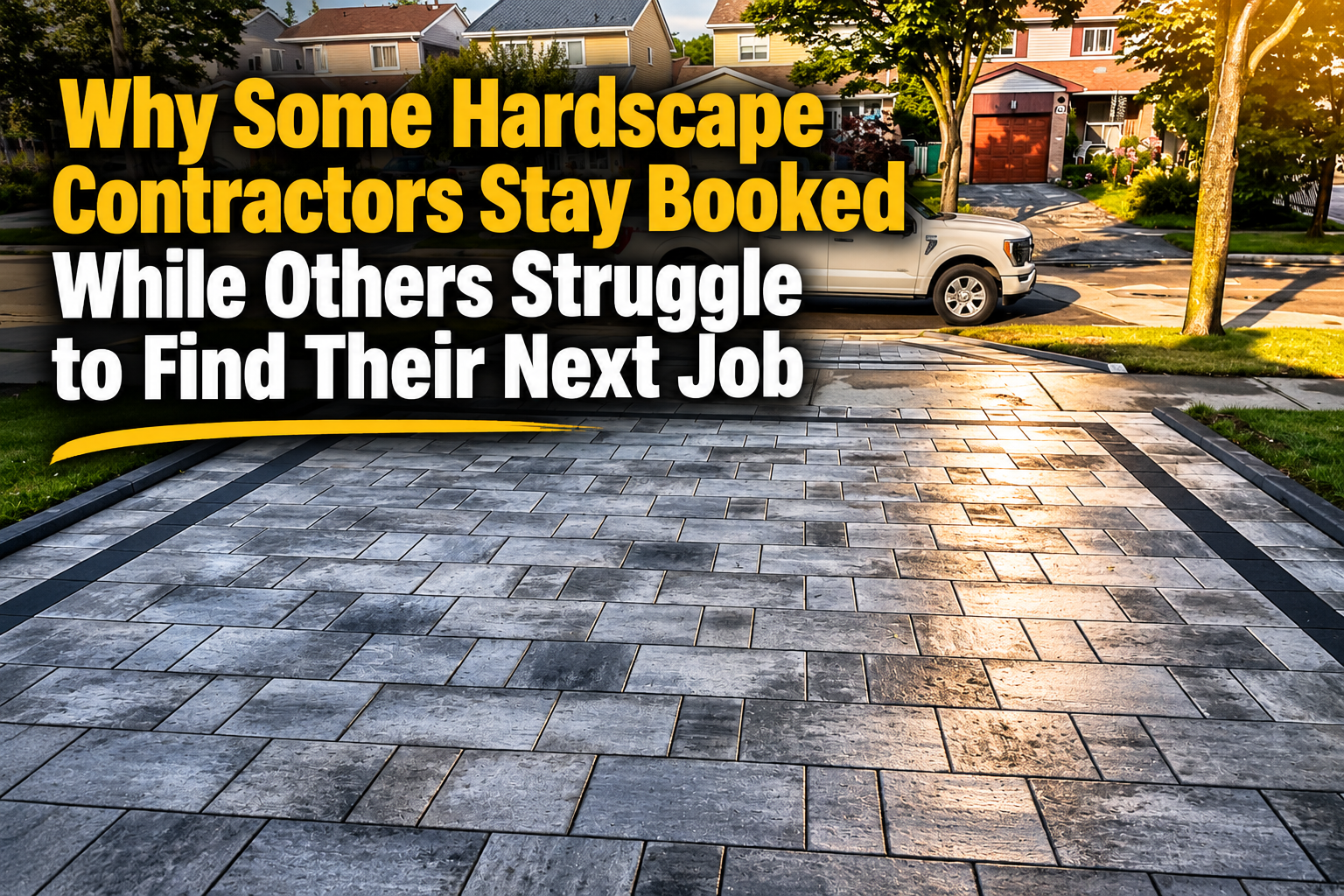
Picture two decorative concrete contractors working in the same area.
Both do excellent work. Both have experienced crews. Both install beautiful stamped concrete patios, decorative driveways, pool decks, and outdoor living spaces.
But there's one big difference.
One contractor has projects scheduled weeks in advance, knows where the next few jobs are coming from, and can be selective about the work they take on.
The other finishes a big project and immediately starts wondering where the next one will come from.
Sound familiar?
The difference often isn't the quality of their concrete work.
It's what happens behind the scenes to keep new opportunities coming in.
Here are six reasons some decorative concrete and hardscape contractors maintain a steadier flow of projects while others experience the frustrating feast-or-famine cycle.
1. They Don't Rely Entirely on Word-of-Mouth Referrals
Referrals are great. In fact, they're often one of the best sources of business for decorative concrete contractors.
A homeowner loves their new stamped concrete patio, tells a neighbor about it, and suddenly you've got another estimate to schedule.
That's how many successful contracting businesses get started.
But there's a problem with depending entirely on referrals.
You can't control when someone recommends your business or when that referral is ready to buy.
One month, the phone is ringing constantly. The next month, things slow down.
Contractors who maintain a more predictable pipeline understand that referrals should be one source of business, not their entire marketing strategy.
They create additional ways for potential customers to discover their services.
That might include maintaining an active online presence, showcasing completed projects, and running targeted Facebook and Instagram advertising campaigns.
The goal isn't to replace referrals.
It's to stop depending on them for every new job.
2. They Put Their Best Projects in Front of More Homeowners
Decorative concrete and hardscaping are visual businesses.
Homeowners don't always know they want a stamped concrete patio, a new pool deck, or a complete backyard transformation until they see what's possible.
That's where great project photos become valuable marketing assets.
Think about it.
You just completed a beautiful $20,000 outdoor living project.
The homeowner is thrilled. The finished work looks incredible.
You take a few pictures, post them on Facebook, and move on to the next job.
But what if those pictures could continue attracting potential customers long after the project was completed?
That's one of the advantages of Facebook and Instagram advertising.
Instead of relying only on people who already follow your business page, paid advertising lets you put your work in front of additional homeowners in your service area.
A compelling before-and-after photo, a short project video, or a gallery of completed patios can introduce your business to people who might be considering similar improvements.
Not everyone who sees your advertisement will be ready to schedule an estimate.
But the right message, shown to the right audience, can create new opportunities for your business.
3. They Focus on Attracting the Right Projects, Not Just More Leads
Here's something many contractors learn the hard way.
More leads don't automatically mean more revenue.
You could receive 50 inquiries from people looking for the cheapest possible concrete work and spend hours preparing estimates that go nowhere.
Meanwhile, another contractor might receive fewer inquiries but connect with homeowners interested in larger, higher-value projects.
Which business would you rather run?
Successful marketing isn't simply about making the phone ring.
It's about reaching homeowners who are a good fit for the services you want to provide.
If your company specializes in premium stamped concrete patios, pool decks, decorative driveways, or complete hardscape installations, your advertising should reflect that.
Showcase the projects you want more of.
Explain what makes your work different.
And make it easy for homeowners to understand the types of projects your company handles.
You can also use a few simple qualifying questions before scheduling an estimate.
For example:
- What type of project are you considering?
- Where is the property located?
- When are you hoping to get started?
- Do you have an approximate budget in mind?
These questions can help your team spend more time with serious prospects and less time chasing projects that aren't a good fit.
4. They Don't Let Interested Homeowners Fall Through the Cracks
Imagine this scenario.
A homeowner contacts your company about a stamped concrete patio.
You visit the property, discuss the project, take measurements, and send an estimate.
Then nothing.
The homeowner doesn't respond.
You get busy with another installation, and the estimate gets forgotten.
Three months later, that same homeowner is ready to move forward.
But they've lost your contact information or simply call another contractor.
Unfortunately, situations like this can happen when there isn't a consistent follow-up process.
And they can represent missed revenue opportunities.
Contractors who maintain a healthier project pipeline recognize that not every homeowner is ready to buy the moment they request an estimate.
Some need time to compare options.
Others are waiting for financing, discussing the project with a spouse, or planning around their schedule.
That's why following up matters.
A simple, well-timed text message or email can restart a conversation that otherwise might have disappeared.
And when your company has accumulated months or years of old estimates, those contacts may represent a valuable source of potential projects.
This is where database reactivation comes into play.
Instead of focusing exclusively on generating brand-new leads, database reactivation helps reconnect your business with past prospects and customers who may still be interested in your services.
For a deeper look at this strategy, read our article: Why Your Old Estimates Are Your Cheapest Source of New Projects.
5. They Market Their Business Before Their Schedule Gets Empty
One of the biggest marketing mistakes contractors make is waiting until they're slow to start looking for more work.
When business is booming, marketing gets pushed aside.
There are installations to finish, materials to order, crews to manage, and customers to keep happy.
Who has time to worry about advertising?
Then a few large projects wrap up.
The schedule suddenly looks a little too open.
And now there's pressure to find new jobs quickly.
The problem is that marketing doesn't always produce immediate results.
Homeowners considering a major patio or hardscape installation may need weeks or months to make a decision.
That's why contractors who stay consistently booked often treat marketing as an ongoing business activity rather than an emergency response to an empty schedule.
They continue building awareness while they're busy.
They keep collecting inquiries.
They follow up with potential customers who aren't ready yet.
And they work to create a pipeline of future projects before those projects are urgently needed.
That doesn't mean you need to spend aggressively on advertising every month.
It means having a strategy that accounts for your crew capacity, seasonal demand, and upcoming schedule.
6. They Have a System for Both New Leads and Old Opportunities
This is where everything comes together.
Some contractors spend all their energy trying to attract new customers while overlooking people who've already expressed interest in their services.
Others rely heavily on past customers and referrals but do very little to reach new homeowners.
Both approaches leave potential opportunities on the table.
A stronger strategy combines two different activities.
Bringing New Opportunities Into the Business
Facebook and Instagram advertising can help introduce your company to homeowners in your service area.
You can showcase your best work, highlight the services you want to sell, and encourage interested homeowners to request more information.
This creates a way to generate new inquiries beyond your existing referral network.
Reconnecting With Opportunities You Already Have
Database reactivation focuses on homeowners who've contacted your company before, requested estimates, or previously hired you.
Some may still be considering their original projects.
Others may be interested in additional improvements.
By following up appropriately, you can uncover potential business without needing to generate an entirely new lead.
When these two strategies work together, you're no longer relying on just one source of future projects.
You're introducing your company to new homeowners while making better use of the opportunities already in your business.
And when you add consistent lead follow-up and a solid estimate process, you create a more reliable system for turning inquiries into booked work.
The Bottom Line: Staying Booked Shouldn't Be Left Entirely to Chance
There's no magic advertising campaign that guarantees a full schedule.
Weather, seasonal demand, competition, pricing, and the economy can all influence how much work is available.
But there is a difference between hoping the next customer calls and building a process designed to generate more opportunities.
Contractors who maintain steadier project pipelines tend to have a few things in common.
They don't depend entirely on referrals.
They regularly showcase their best projects.
They focus on attracting the types of jobs they actually want.
They follow up with homeowners who haven't made a decision.
And they continue marketing before their calendars start looking empty.
You don't necessarily need to overhaul your entire business to get started.
Sometimes, the first step is simply identifying where potential jobs are being lost and creating a better system for capturing those opportunities.
Because the goal isn't just to get more leads. It's to turn more of the right opportunities into profitable projects.
Ready to Build a More Consistent Pipeline of Concrete and Hardscape Projects?
GroundGame R.O.I. — Helping Decorative Concrete and Hardscape Contractors Land High-Margin Jobs.